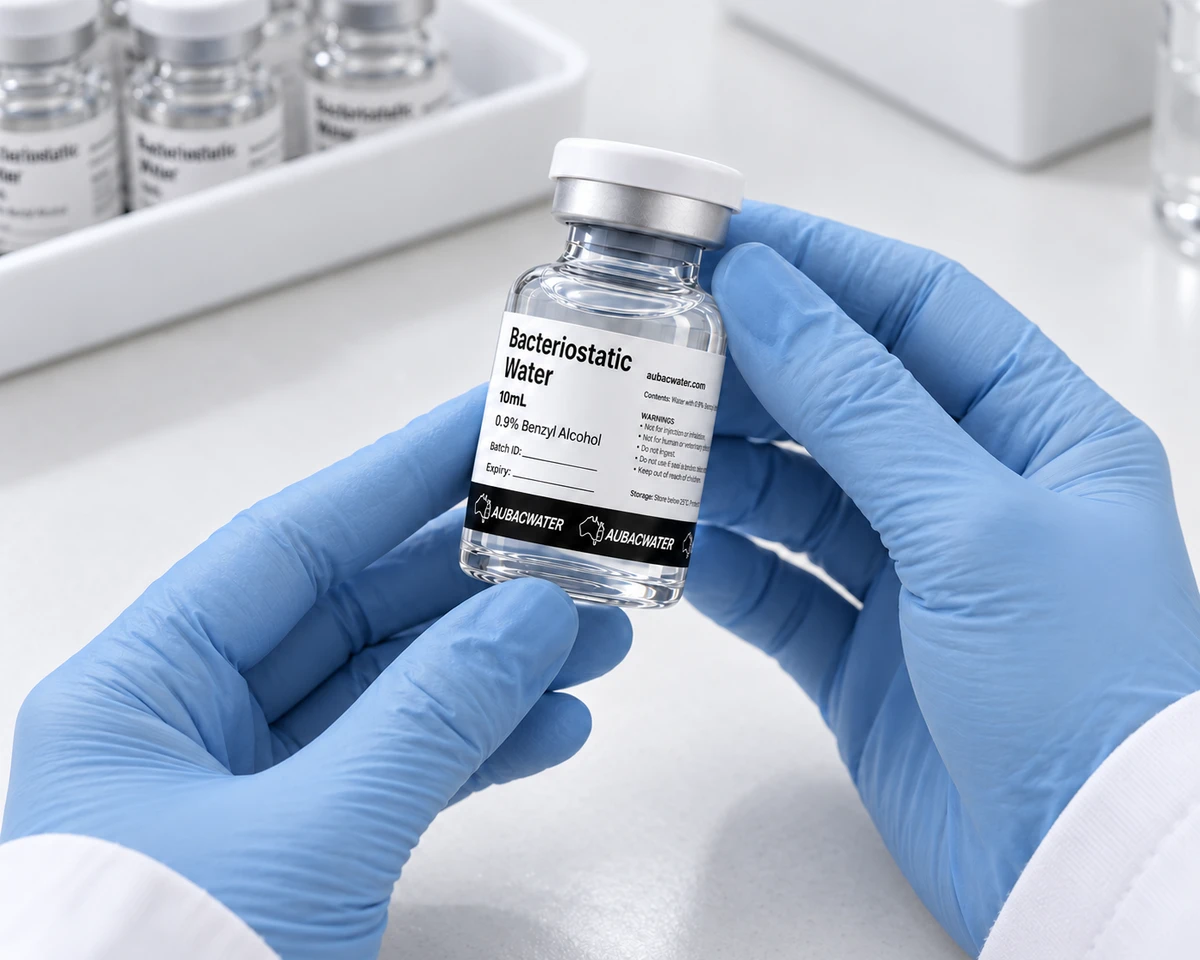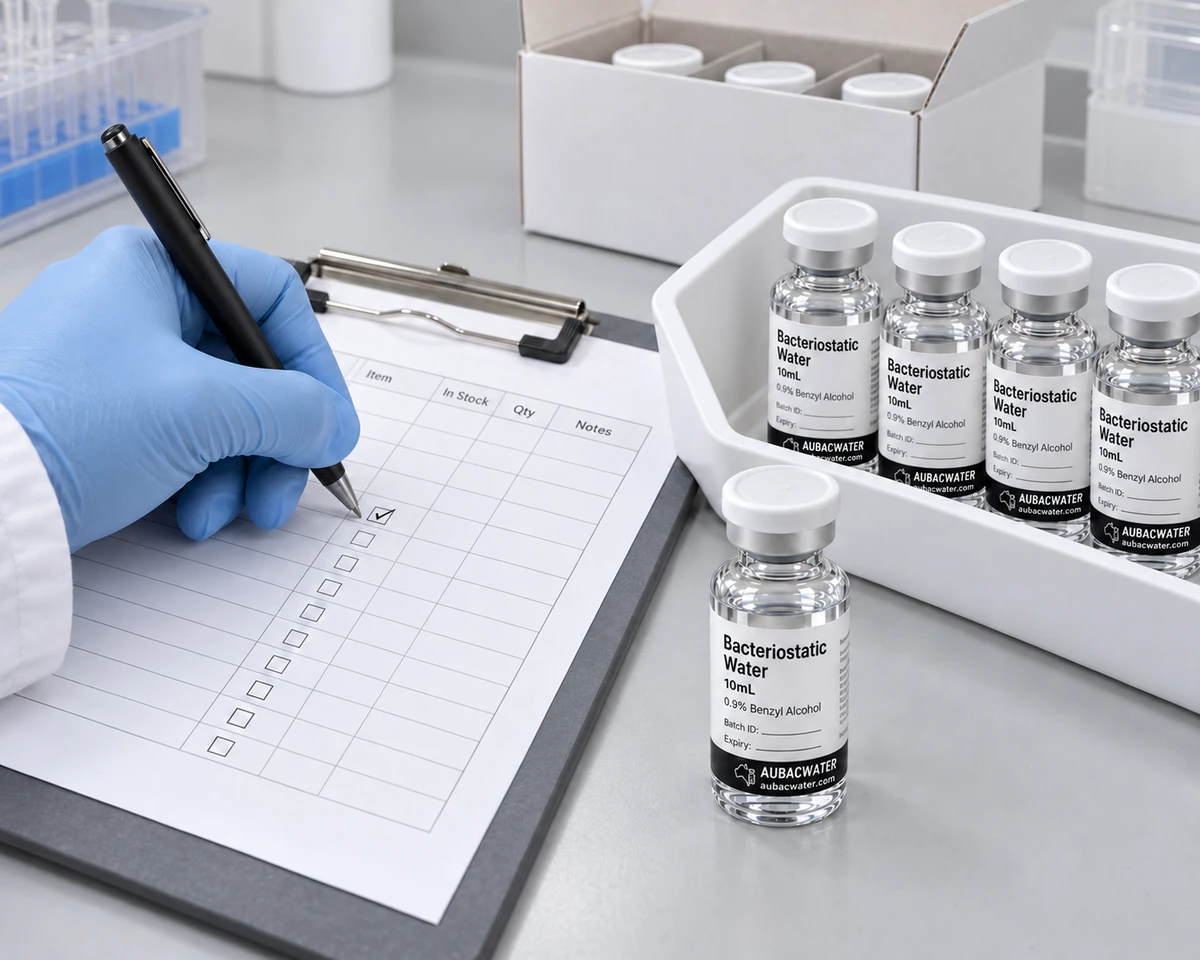
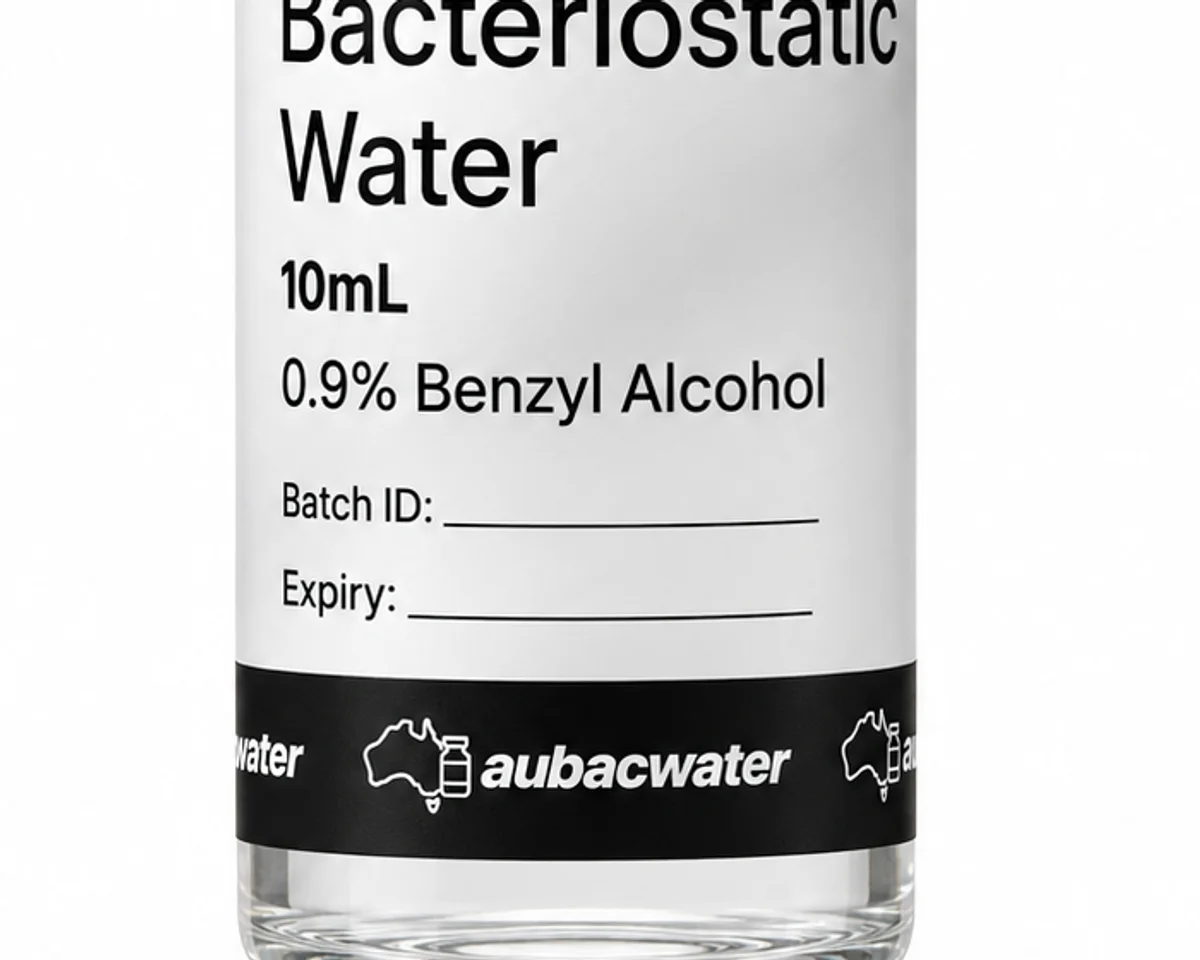
A lot or batch number ties a vial to one production run, and an expiry date is the point after which the label says not to use it. Read both from the vial in your hand, write them down when stock arrives, and keep the original packaging so they stay legible.
What a lot or batch number identifies
Lot and batch mean the same thing on a label. Australia's labelling order for prescription and related medicines, Therapeutic Goods Order No. 91, defines a batch number as a number, or a combination of numerals, symbols or letters, given by a manufacturer to uniquely identify a batch, and from which that batch can be traced through all stages of manufacture and distribution.
That definition explains why the code looks arbitrary. It is not a product name, a size or a date. It is a reference that only means something to the manufacturer's records, and that is its value: if a question is ever raised about a production run, the code tells you whether the vial on your shelf belongs to it.
The prefixes to look for
Vial labels are small, and these two details are often printed in a separate area rather than with the product name. The prefix is what tells you which is which. The same order lists the forms it accepts, which makes it a useful guide to the wording you will meet.
- For the batch: BATCH NUMBER, BATCH NO., BATCH, B, (B), B/N, LOT NUMBER, LOT NO. or LOT.
- For the expiry date: EXPIRY DATE, EXPIRY, EXPIRES, EXP. DATE, EXP, Use by or Use before.
- Best by and Best before are specifically excluded as expiry prefixes under that order, so treat them as a reason to look more closely at what the label is telling you.
How an expiry date is written
The order defines an expiry date as the date, given as a month and year, after which the medicine should not be used. Formats still vary by manufacturer and by country of origin, so read the date as it is printed instead of assuming a layout.
Hospira's label panels for its bacteriostatic water show the pattern clearly. In its published prescribing information the 30 mL vial label has a lot area printed in the form ##-###-AA and an expiry area in the form DMMMYYYY: a day, a three-letter month and a four-digit year. A date written with letters for the month is harder to misread than one written only in numbers, where the day and the month can be confused.
Own-label and manufacturer vials
AUBACWATER own-label vials are supplied for laboratory use, and their label carries lines marked Batch ID and Expiry. Hospira vials carry Hospira's own lot and expiry details. Therapeutic Goods Order No. 91 is quoted here because its definitions are clear, not because it describes the own-label range, which is not supplied as a medicine.
Whichever vial you have, the vial itself is the record. Product photographs on any website, including this one, illustrate a range and do not show the lot or expiry of the stock you will receive.
What to write down when stock arrives
It takes a minute when the parcel is open and very little time compared with reconstructing it later. A line per lot is enough, because a pack from one delivery may hold more than one.
- The product name, brand and vial volume, copied from the label.
- The lot or batch number, exactly as printed, including any letters and dashes.
- The expiry date, exactly as printed.
- The date received, the quantity and your order reference.
- The storage statement on the label, and where the stock is kept.
If a detail is missing or unreadable
Do not fill the gap from memory, from another vial or from a website image. Keep the item separate, with its packaging, and contact us with your order reference and a clear photograph of the label so we can look into it. Your rights under the Australian Consumer Law apply regardless.
What this article does not cover
It explains two label details and how to keep a record of them. It does not describe how any product is prepared, withdrawn, mixed or used, and it is not medical or clinical advice. AUBACWATER own-label bacteriostatic water is supplied for laboratory use and is not for injection, infusion or administration.
Sources
- Therapeutic Goods Order No. 91: Standard for labels of prescription and related medicines, compilation of 7 December 2024 (Federal Register of Legislation)
- Bacteriostatic Water for Injection, USP, multiple-dose vial: prescribing information published by Hospira, Inc. (DailyMed, US National Library of Medicine; label revised August 2019)
These guides support product comparison and stock organisation. Follow the exact product label and intended-use information for the presentation you choose.